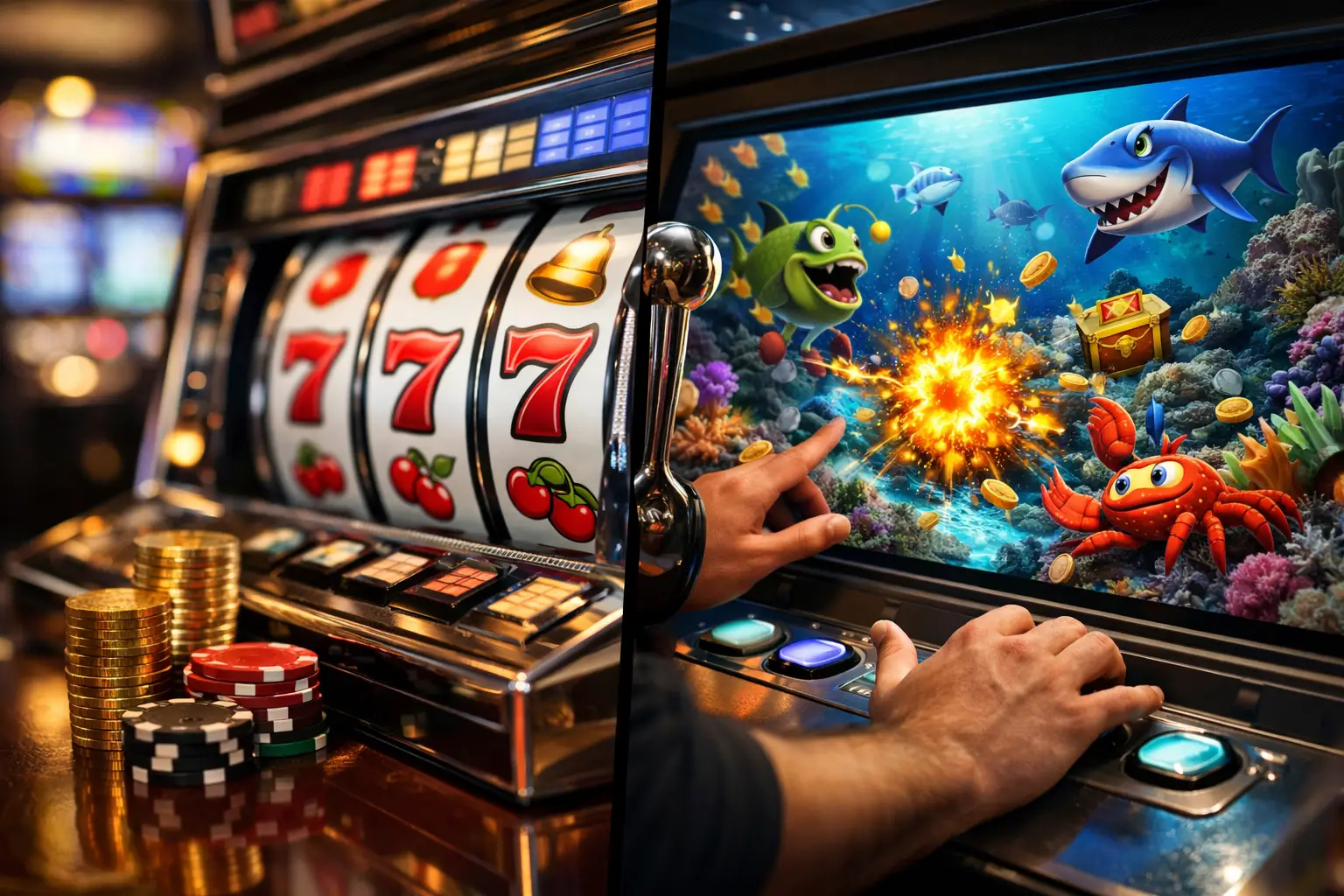
A five-minute break can call for a quick spin, a longer session can call for more hands-on action, and that difference is at the center of slots versus fish games. Both categories deliver casino-style entertainment with digital coins, colorful themes, and frequent opportunities to switch things up. The better choice depends less on which game is "best" and more on how you want to play.
Slots are built for immediate access. Choose a title, set your play level, and start spinning. Fish games add an active layer: you aim, shoot, manage your shots, and follow targets as they move across the screen. On a social gaming platform, both can fit the same account and wallet experience, but the rhythm of play is completely different.
Slots Versus Fish Games: The Core Difference
Slots are primarily chance-based reel games. A spin starts the action, and the game evaluates the result according to its displayed mechanics. The player experience centers on theme, volatility feel, bonus features, symbols, free-spin rounds, and the satisfaction of seeing the reels land.
Fish games are arcade-style shooting games with casino-inspired reward structures. Instead of waiting for reels to stop, players select a cannon or shot level and target fish or other moving creatures on the game board. Each shot uses coins, and the action stays on screen continuously. A session can feel more interactive because your attention is on aim, timing, target movement, and shot selection.
That does not mean fish games are a skill shortcut or that slots are passive in a negative way. Both are designed around game rules and chance. In fish games, aiming may change how the session feels, but it does not create a guaranteed outcome. The practical difference is control over the moment-to-moment action.
Choose Slots When You Want Fast, Focused Play
Slots work well when you want a clean, low-friction game session. There is no target tracking, no moving board to monitor, and no need to decide where each shot goes. You can explore a new release, revisit a favorite, or move through several themes in one sitting without learning a new control system each time.
The variety is a major advantage. One slot may use a classic fruit-machine layout, while another offers cascading symbols, expanding wilds, pick-and-click bonus rounds, or a storyline built around a specific theme. That makes slots a strong category for players who like browsing. If a game does not match your mood, switching takes seconds.
Slots also suit mobile-first play. The core interaction is simple, the screen is easy to read, and a short session can still feel complete. Players who prefer a relaxed pace often choose slots because the game handles the flow between spins.
The trade-off is that slots offer fewer in-the-moment choices once a spin begins. Your decisions usually happen before the spin: selecting a title, reviewing its rules, choosing a play level, and deciding whether to continue. If you want constant input during the game itself, fish games may hold your attention longer.
What to Review Before Starting a Slot
Check the game’s available play levels, featured mechanics, and rules screen before committing coins. A familiar theme can be fun, but the feature set often determines whether a title fits your session. Some players want quick base-game spins; others specifically look for bonus rounds or a higher-energy format.
It also helps to set a session limit before you begin. Your dashboard and wallet are there to support clear account visibility, not to turn every session into a chase. Decide how many coins you are comfortable using for entertainment, then keep that number in view.
Choose Fish Games When You Want Active Screen Time
Fish games are a better fit for players who want to stay engaged between every action. The board is active, targets move at different speeds, and the visual experience is closer to an arcade game than a reel game. Rather than pressing spin and watching a result, you are repeatedly choosing where to direct your shots.
This format can make time move quickly. Larger targets may draw attention, while smaller targets move across the board and keep the screen busy. Some games include special creatures, bosses, weapons, or temporary board events that change the pace. The result is a category that rewards focus and feels social even when you are playing independently.
Fish games can also work well for players who enjoy adjusting their approach during a session. You may choose a lower shot level while getting familiar with the board, then change your selection when the action picks up. Those choices create a sense of participation, but they should still fit within the coin amount you planned to use.
The trade-off is intensity. A fish game asks more from your attention than a typical slot. That is great for a longer, active session, but it may not be ideal when you simply want a few quiet spins while waiting in line or winding down at night.
A Better Way to Manage Fish Game Sessions
Start by learning the controls at a comfortable level. Watch how the board moves, identify the game’s special elements, and avoid assuming that a larger target is automatically the right choice for every shot. Each title can use different features and display information differently.
Because shots can happen quickly, set a clear stopping point. You might use a time limit, a coin limit, or a simple rule such as ending after a defined number of rounds. This keeps active play enjoyable and makes it easier to track your wallet without interrupting the fun.
Coin Management Matters in Both Categories
Whether you play reels or target fish, the account experience should stay clear. Know which digital currency you are using, check your available balance, and review your account history when you need to confirm activity. If a platform offers promotional coins, purchase options, or Sweepstakes Coins that may be eligible for redemption under its rules, treat each balance according to the terms shown in your account.
Do not choose a game based only on a recent result or a flashy on-screen moment. Every session is separate, and no category can promise a specific return. Slots can produce dramatic feature rounds, while fish games can create exciting bursts of action, but neither should be approached as a guaranteed way to recover coins or reach a target balance.
Responsible play tools are part of a good platform experience. Use available account controls, take breaks when the pace stops feeling fun, and review transaction history if you need a clearer picture of your activity. The right game is one that matches your entertainment budget and leaves you in control of the session.
How to Pick the Right Category for Your Mood
Think about what you want from the next ten minutes. If you want fast setup, theme variety, and a simple spin-based format, start with slots. If you want a moving board, repeated decisions, and arcade-style interaction, start with fish games.
Your preference may change from day to day. A player can enjoy a new slot release during a short break, then move to fish games later when there is time to focus. That flexibility is one of the benefits of a category-based social casino platform: you do not need to force every session into one style of play.
Kickbackspins gives players room to move between familiar favorites, trending titles, new games, and active fish-game action while keeping wallet details and account activity easy to find. Use the game categories as a menu, not a commitment.
The most useful choice is the one that fits your pace right now. Pick a title with rules you understand, set your coin boundary before play begins, and let the experience stay what it should be: a controlled, entertaining break on your terms.